Showing posts with label Science. Show all posts

Tuesday, November 29, 2011

Evolution: Theory or Fact?


In arguing against evolution, critics often cite its ranking as merely a "theory”.  Since scientists refer to the “Theory of Evolution”, does this give credence to the critics?
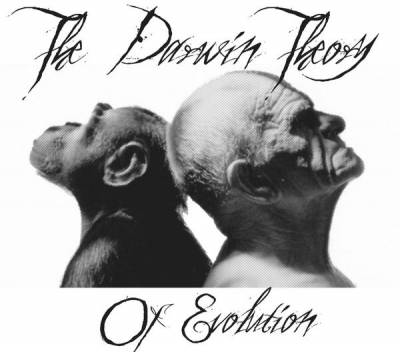
No, is the simple answer.  The problem that arises is a discrepancy between what constitutes a theory for laymen and scientists.  For laymen, a “theory” can mean something speculative and tentative.  We use it in everyday speech like this.  Scientists, however, use it in a much different way.  The Theory of Evolution has been grounded in an enormity of evidence. 

Richard Dawkins recently explained this in an interview with BigThnk, a "forum where top experts explore the big ideas and cores skills of the 21st century".  In his interview he stated that “the evidence that makes it a fact is partly fossil evidence, partly comparative evidence, looking at modern species and comparing their bones, their organs, their structures generally, and especially their molecules, their genes, at a molecular level. This is extremely persuasive and powerful evidence. You compare the genes of animals and plants. You find that the pattern of resemblance is a tree, a branching tree. And that branching tree could only be a family tree.”  Watch the full interview here. 

Dawkins argues that if we are going to refer to evolution in laymen’s terms, the term “fact” is more accurate than “theory”.  I tend to agree with this.  People who flatly deny any of the evidence that supports evolution or natural selection do so because they don’t want to believe it.  This is called confirmation bias and is one of the faults of the human brain. 

Though I agree that in laymen’s terms evolution is closer to a fact than a theory, I think it’s important to choose our words carefully.  Ultimately, I wish that laymen had a basic understanding of science so that we wouldn’t have to worry about confusing scientific and laymen’s terms.  I wish people knew that Theory of Evolution is just that – a scientific theory that’s been supported by mountains of evidence.  This should be amazing enough.

-------
The Takeaway: Let’s not mix terms.  Let’s teach everyone a basic understanding of science so that everyone can appreciate its brilliance.

Sunday, November 20, 2011

Faster Than the Speed of Light? Not so Fast...


Physicists may have discovered a particle that can travel faster than the speed of light.  This discovery – if confirmed –could rock the scientific world.

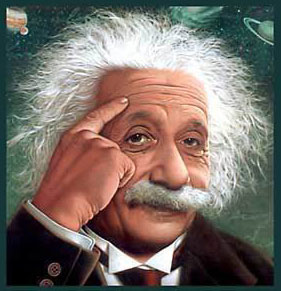
Nothing travels faster than the speed of light. Since Einstein made this claim, no one has offered any evidence to the contrary.  In fact, for the better part of the last century this has been one of the mantras modern physics.   

In September, a team of scientists first claimed that a sub-atomic particle called the neutrino could travel faster than the speed of light. This caused a firestorm of skeptics. It was almost a sacrilegious (irony intended) statement.  Now, a handful of physicists have claimed this again, using a fine-tuned experiment that matches the previous results.

First of all, why is this a big deal?

For those not acquainted with physics, it’s hard to comprehend the magnitude of stating that “there is a particle that can travel faster than the speed of light”.  Light as the ultimate speed in the universe is the backbone of Einstein’s Theory of Relativity, which is a foundation of physics. 

Second, can a particle actually travel faster than the speed of light?

It depends on who you ask.  The experiments that have gotten a handful of physicists excited and the rest skeptical are very difficult to replicate.  The physicists that are conducting these experiments are essentially measuring subatomic particles – known as neutrinos – as they travel extremely quickly through other matter.  Here is Brian Greene, a professor of physics and mathematics at Columbia University, explaining the experiments on NPR’s All Things Considered:

“In principle, it's quite straightforward. They take these particles and they fire them from Switzerland to another receptor at another laboratory in Gran Sasso in Italy. And what they do is they calculate how long it took the neutrinos to get there and they calculate how long the journey is and that's all you need to figure out speed.”

Third, why are so many physicists skeptical about these results?

Because the neutrinos are passing through the earth's crust, it’s very hard to precisely measure the distance between two places.  As Brian Greene stated, “It isn't as though you can just lay out a tape measure…”  What’s even more difficult is syncing the clocks at both locations.  This isn’t like syncing your alarm clock to the one in your kitchen.  These two clocks need to be synchronized to a fantastic precision. 

Lastly, if these results are true and can be replicated in other experiments, what does this mean for the Theory of Relativity, Einstein and Physics?

Though the notion that nothing travels at the speed of light is at the heart of Einstein’s Theory of Relativity, according to Brian Green we would have “all of the wonderful features of relatively still with us.”  In essence, we would just have to live with a more refined version of relativity.  Einstein would still be the figure head of physics.  E = MC2, the true unifying equation of modern physics would still be around.

It seems to me that the struggle between the physicists conducting the experiments and the skeptics is what makes science so promising.  It’s clear that the scientists who conducted the experiments are excited about those results.  They should be!  But, what separates science from other means of inquiry is that it requires evidence.  Skeptics like Brian Greene demand that the results be replicated in an entirely independent experiment.  I agree with the skeptics that only after such an experiment can we claim that something travels faster than the speed of light. 

-------

The Takeaway: I ❤ science.